Thursday, March 22, 2012

Day 187! UK~Bubble and Squeak - Up Next, USA


Shout-out to our family friend, Kevin who inspired me to make Bubble and Squeak to represent the UK. Kevin recently traveled to England and regularly saw this dish on restaurant menus. As we got talking about his recommendations of what meal would best capture the culture of this beautiful country, he produced his phone with lightning speed, did a few seconds of research for me, and instantly sealed the deal - Bubble and Squeak it would be. I mean, the name alone is reason enough, right?! And just so you know that I only use the most reliable sources, Kevin is a pre-med student at Harvard, so who am I to question his advice?! Way to be Dr. to-be!
Map Courtesy of Lonely Planet
The United Kingdom is a sovereign state on the North Western coast of the continent of Europe. The UK is comprised of England, Northern Ireland, Scotland and Wales and is surrounded by the Atlantic, North Sea, the English Channel and the Irish Sea. The earliest record of human inhabitants dates back 30,000 years ago. In 1707 the kingdoms of England and Scotland were created and by the 18th century, the parliamentary system was developed. One of the most significant events that helped grow the British Empire was the Industrial Revolution. The textile industry along with shipbuilding, coal mining and steel making positioned the UK as a major international trade force, as it continues today. Finally, by 1801, the Parliament of Great Britain and Ireland united to create the United Kingdom of Great Britain and Ireland. Of course the country has much richer, more complex history which cannot be captured in this little blog.

Owing to its temperate climate and ample rainfall, cool weather vegetables such as potatoes, peas, cabbage, carrots, parsnips, turnips and brussel sprouts (to name but a few) are most commonly grown. Dairy products like eggs, cheese, butter and cream are plentiful as well. Traditionally British food is based on beef, lamb, pork, chicken and fish.. The most common and typical foods eaten in Britain include the sandwich, fish and chips, pies like the cornish pasty, trifle and roasts dinners...and let's not forget tea and beer, both of which are hallmarks of the UK's cuisine and culture.

Bubble and Squeak is a traditional British fried dish of left-over vegetables. The name comes from the popping and squeaking sound the densely packed vegetables make as they cook under pressure. Traditionally it was eaten on a Monday for lunch or dinner with a fried egg, bacon, or meat leftovers. From what I can tell, there isn't a specific recipe for Bubble and Squeak, since other than the mandatory base of mashed potatoes that binds all the vegetables, any leftover vegetables from the night before can be used. Most of the recipes I found included cabbage, but other than that, any combination of carrots, parsnips, turnips, Brussels sprouts, broccoli and peas be used. Interestingly, in Ireland, the same meal is called colcannon, but uses kale and onions, and in Scotland, it's called rumbledethum. Lastly, according to traditional recipes, animal fat, like lard, should be used to achieve a perfect golden brown exterior. I couldn't bring myself to use lard,...but, I most certailny could use bacon as mighty and righteous substitute.

Last night's leftovers - Roasted carrots, turnips, parsnips and boiled cabbage

Left over vegetables, mashed potatoes and frozen peas (added frozen, not pre-cooked)
 Mmmmmm....bacon - nothing more need be said
 Chop vegetables
Fry bacon - reserve grease for cooking patties
 Combine vegetables with mashed potatoes, shape into patties and fry in bacon fat and onions
Served up for breakfast with a fried egg - Bubble and Squeak rules!


Bubble and Squeak (adapted from about 20 different recipes)

4 tbsp. bacon fat
½ cup onion, finely chopped
Leftover mashed potato
Any leftover vegetables, cabbage, carrots, peas, Brussels sprouts, parsnips, turniips etc...finely chopped
Salt and freshly ground black pepper
Fried bacon pieces (optional)
Preparation:

In a large frying pan, fry bacon. When bacon is crisp, remove and reserve.
To the bacon fat in the pan, add the chopped onion and fry gently for 3 mins or until soft.
Combine mashed potatoes and vegetables, form into patties (about the size of a hamburger).
Turn the heat up slightly and add the mashed potato and vegetable patties. Fry for 5-7 mins turning over in the bacon fat,  two or three times ensuring the potato and vegetables are thoroughly reheated.
Press the potato mixture patties on to the base of the pan with a spatula and leave to cook for 1 min. Flip over and repeat.
Serve.


© 2010-2011, What's Cooking in Your World? Sarah Commerford/All Rights Reserved

Wednesday, March 14, 2012

Day 186! United Arab Emirates-Garlic, Thyme and Lemon Pita Bread - Up Next, United Kingdom


If I had any resolve at all, I'd be finishing our taxes. But let's face it, when it comes to doing taxes, it takes very little to distract me from the pain. So, it's a good thing I happened on this A-mazing recipe for garlic, thyme and lemon pita bread from the United Arab Emirates (UAE), because one more minute of number crunching and sifting through piles of paper (hello, husband? thanks so much for the wad of gas receipts), would have done me in.  I will NEVER buy pita bread again. This was super easy - the whole process took about 45 minutes from start to finish. And, if I could only describe the combination of lemon, garlic, olive oil and thyme, you'd high-tail it to your kitchen to try. But I can't. Words fail me - it's that sublime. I had it for lunch with a dish of humus, topped with parsley, pine nuts and a drizzle of olive oil. And tomorrow morning, I'll toast it for breakfast. What taxes?

Map Courtesy of Lonely Planet
The United Arab Emirates (UAE), is a country in the South East part of the Arabian Peninsula in Western Asia on the Persian Gulf. The country shares its borders with Oman and Saudi Arabia and its maritime borders with Iraq, Kuwait, Bahrain and Iran. The UAE constitutes a federation of seven emirates, which are each governed by a hereditary emir and a single national president. The earliest human evidence dates back to 550 BC. Trade in this beautiful country mainly consisted of copper, then later camels, pearls and wares brought by seafaring merchants. Until gaining independence and a constitution in 1971, the country was ruled by the Portuguese, followed by Europeans until the UK formed the Trucial States in the 19 century.  Now, a powerful and oil rich country, the UAE is home to a strong economy and plentiful natural resources, as well as resurgence of nearly extinct animals like the Arabian oryx, leopards, coastal fish and mammals. Islam is the country's official religion and Arabic the language.

Owing to the country's dry climate, vegetables are grown, but are not a significant part of the diet, which is a blend of Middle Eastern and Asian traditions. Meat, grains, dairy, sea food, chicken, goat, mutton and lamb are all enjoyed, usually in the form of stews or grilled meats and kebabs. Saffron, cardamom, turmeric, thyme are the primary spices that flavor the food. Delicious yeast breads, rice, cheese, dates and date syrup, eggs and sesame seeds as well as kabsa, falafel, shawarma, kebobs and tea are just a sampling of the rich and interesting culinary variety this country offers.


Garlic, Thyme and Lemon Pita Bread (Recipe Adapted from Celtnet)

Ingredients: 6 garlic cloves, very finely sliced
2 tsp dried thyme, ground to a powder
2 tbsp finely-grated lemon zest
4-4-1/4 cup white flour
3 tbsp sugar
1 tbsp salt
4 tsp. dried, active, yeast
1 tbsp. olive oil
1 -1/2 warm water (about)

Fry the garlic in 2 tbsp olive oil until just browned then transfer the garlic and oil into your mixing bowl and allow to cool.
Meanwhile, pre-heat your oven to 425 F and place your baking tray in there to keep warm.
Mix all the dry ingredients together (including the yeast) and add to the bowl containing the fried garlic, along with the thyme and lemon zest.
Add the oil and half the water and mix together.
Now add just enough water so that the ingredients come together as a soft, pliable, dough.
Turn the dough onto a floured surface and knead for 10 minutes, until smooth and elastic.
Wrap in plastic wrap and set aside to rest for half an hour. Once the time is up, divide the dough into 5 balls. Use a rolling pin to roll each one of these into flat ovals about 1/8-inch thick (ie pitta bread shapes).
Wrap any remaining dough in plastic wrap so they don't dry out.
Take the hot baking tray out of the oven, lie your two pita breads on the tray and immediately replace in the oven. Bake for about 4–5 minutes, or until risen and only just colored.
Immediately remove from the tray and leave to cool under a cloth (this prevents them from drying).
You can either freeze until later or re-heat that day to eat. Continue cooking the remaining pita breads until all 6 are done.


© 2010-2011, What's Cooking in Your World? Sarah Commerford/All Rights Reserved

Friday, March 9, 2012

Day 185! Ukraine - Borsch (Vegetarian) - Up Next, United Arab Emirates


Whoa! I had no idea there were so many different kinds of borsch. I'd always assumed that borsch was, well, borsch - basic beet soup. But, in fact, the word borsch simply means any soup made with a variety of vegetables, and in Eastern Europe, there are hundreds of varieties, each one considered authentic. Some have beef, some have sausage, some have bacon and still others have a whole range of vegetables. Since I often cook with meat, I decided to go the vegetarian route, opting instead to made a simple soup where the beautiful earthy beet flavor would be the star. Pure in flavor, spectacular in color and loaded with vitamins, borsch is now officially on my "this is surprisingly awesome" list of foods. Oh, and don't forget to serve it with hearty pumpernickel, slathered with sweet butter. Epic.

Map Courtesy of Lonely Planet
Located in southeastern central Europe, Ukraine borders Russia, Belarus, Moldova, Slovakia, Romania, Hungary, Poland, Russia, Georgia, Bulgaria, Turkey the Black Sea and the Sea of Azor. The second largest contiguous country on the European continent after Russia, this beautiful country is extremely bio-diverse, and is home to thousands of plants, mushrooms, berries and animals. Established in the 9th century by the Varangiansin, the country was a powerful nation in the Middle Ages. By the 14th century, Ukraine was under the rule of the Golden Horde, the Grand Duchy of Lithuania and the Kingdom of Poland and by the 19 century, the largest part of Ukraine was integrated into the Russian Empire. From 1917-1921, the country fought for independence, following WWI and the Russian Civil War. Finally, when the Soviet Union disolved in 1991, Ukraine declared independence. Today, Ukraine is a globably important country and is the 3rd largest grain exporter in the world.

Cuisine in Ukraine is influenced by Russian, Polish, German and Turkish traditions. Meat, mushrooms, vegetables, berries, fruits and herbs are abundant in Ukranian cooking. Called the "breadbasket" of Europe, bread in many forms and cooking methods is integral to the countries culinary identity. Pickled vegetables, dumplings, cabbage, beets, cheese, pork, fish, lamb, potatoes, tortes, nuts poppy seed pastry and cakes are all typical of the country's cuisine.


Chop onions, beets and carrots
 Chop cabbage

 Add vegetable broth, vinegar and butter and simmer
 Grated cucumber makes a lovely garnish
 Sour cream and dill top it all off
 Warm or cold, borsch is delicious 

Borsch (Beet Soup) - Adapted from the Joy of Cooking

1/2 cup peeled carrots, finely chopped
1 cup peeled onions, finely chopped
2 cups peeled beets, finely chopped
1 Tbsp. butter
2 cups vegetable broth or stock
1 cup finely shredded cabbage
1 Tbsp. vinegar
Garnish
Sour Cream
Grated cucumber
Dill

Chop carrot, onions and beets. Add to pot and barely cover with boiling water. Simmer gently, covered for about 20 minutes.
Add butter, stock, shredded cabbage and vinegar and simmer for another 15 minutes.
When cooked, blend or run soup through a food mill until desired consistency.
Ladle into bowls, top with a dollop of sour cream, a spoonful of cucumber and sprinkling of dill.
Serve with good pumpernickel bread and butter.


© 2010-2011, What's Cooking in Your World? Sarah Commerford/All Rights Reserved

Saturday, March 3, 2012

Day 184.5~Matcha Green Tea and Pistachio Pinwheel Cookies


Can baked goods be multi-cultural? Why yes indeed, they can. Meet my latest Celtic-Japanese cookie creation. What makes them Celtic? Well, they ARE green, and we ARE nearing Saint Patrick's Day. The matcha Green Tea is Japanese and, if you count the pistachios, originally grown in Persia (Iran), then they're the ultimate tri-cultural confection.

This cookie is a variation on the old-fashioned vanilla and chocolate pinwheel cookie that I first learned to make under my Irish grandmother's tutelage. It's essentially a refrigerator sugar cookie (the dough has to be chilled because it's so sticky) that's been around for eons. But since I bought this matcha tea powder, I've been thinking about how to incorporate it into baked goods. My friend Sylvie M. sent me a whole bunch of matcha green tea recipes from France that I plan to try, but today, I decided to give my grandmother's old fashioned cookies a cultural up-date...after all, this is a blog that explores food from around the world.

So, you're wondering about the flavor. Honestly, I can only barely taste the matcha green tea in the cookie, but the powder colors the dough so beautifully, that it doesn't really matter. The flavor is buttery and rich and the crunchy pistachios add both texture and toasted nuttiness. Perhaps next time I'll add a little more tea and see if I can bring the taste up. Until then, however, as I close my eyes and take a nibble, I swear I taste Ireland, Japan and Iran, all happily co-mingling and getting a long just fine. I doubt the world's complex problems could ever be solved with cookies, but since nothing else seems to be working, these might just be a good place to start. Peace.
Flour, sugar, baking powder, salt and eggs - pretty basic cookie dough ingredients
 Unsalted pistachios, chopped finely (you can use a mini food processor too)
 Oh, right - the butter. Don't forget the butter.
 Sift flour, salt and baking powder. Then cream butter and sugar.
 Divide dough in half. Mix matcha green tea powder into one half of dough.
Wrap both up, and chill for at least 30 minutes.
 Roll both out to 16x12" rectangles
 Stack dark dough on top of light dough and roll tightly  dough is sticky and takes some finessing)
 Refrigerate for  3 hours, slice into 1/4-inch pieces and place on parchment lined cookie sheet
 Cool on a wire rack - done!

Matcha Green Tea and Pistachio Pinwheel Cookies

(Makes About 5 Dozen Cookies)

3 cups all-purpose flour
1/2 teaspoon baking powder
1/2 teaspoon salt
1 cup unsalted butter, softened
1 1/3 cups granulated sugar
2 eggs
2 teaspoons vanilla extract
1-1/2 tsp. matcha green tea
1/2 cup unsalted pistachios, unsalted

1. In large bowl, stir together flour, baking powder, and salt. In large bowl, beat butter and sugar with electric mixer until light and fluffy, about 2 minutes. Add eggs, one at a time, beating after each addition; add vanilla. Add flour mixture and beat on low until just combined.

2. Divide dough in half. Form 1 half into 4 in. by 4 in. square; wrap in plastic wrap and set aside. Return other half to mixer; add matcha green tea to dough in mixer and beat just until combined. Form matcha green tea dough into 4 in. by 4 in. square and wrap in plastic wrap. Refrigerate both doughs at least 30 minutes.

3. Very lightly, dust a large rectangle of parchment paper, roll vanilla dough into a 16 in. x 12 in. rectangle about 1/8 in. thick. On another sheet of parchment paper, roll matcha green tea dough into a 16 in. x 12 in. rectangle about 1/8 in. thick. Place green tea dough over onto vanilla dough; peel away parchment. Cut dough horizontally in half. Roll each half into a tight log. Roll in chopped pistachios to coat, applying just enough pressure to ensure they stick. Wrap in plastic wrap and refrigerate 3 hours or overnight.

4. Preheat oven to 350°F. Line cookie sheets with parchment paper. .

5. Slice logs into 1/4 in. pieces. Space 1 in. apart on cookie sheet. Bake 8-10 minutes, or until vanilla dough is lightly golden.


© 2010-2011, What's Cooking in Your World? Sarah Commerford/All Rights Reserved

Thursday, March 1, 2012

Day 184! Uganda ~ Chicken Luwombo - Up Next, Ukraine


This recipe comes courtesy of my Ugandan friend, Josh, who has graciously shared his favorite dish. Josh and I became friends on Facebook through my blog and I'm delighted to be able to share both his recipe and the remarkable work he does. Josh is the founder of  Driving Change Youth Initiative, based in Uganda. Driving Change Youth Initiative is an initiative by and for young people from all backgrounds (both the privileged and non privileged), that aims to develop and unleash youth potential to bring about positive change into Ugandan society. As the co-owner of a Special Education Advocacy practice, Josh's commitment and work with children is near and dear to my heart. So, while I may never be fortunate enough to travel to Uganda, I am truly honored to be able to connect with Josh's culture by preparing his favorite dish, Ugandan Luwombo. Thank you, Josh, for your kindness and generosity ~ we LOVED the meal!

Map Courtesy of Lonely Planet
Located in east Africa, the beautiful country of Uganda is bordered by South Sudan (a brand new country), Kenya, Democratic Republic of Congo, Tanzania and Rwanda. Uganda is unique in that the eastern part of the country's Savannah meets the west African jungle. As such, the country's bio-diversity supports spectacular wild life ranging from plain animals like lions, to jungle primates and water animals such as hippos and crocodiles, not to mention over 1,000 bird species. A cultural melting pot with more than 30 different indigenous languages belonging to 5 distinct linguistic groups, the country's earliest inhabitants were hunter gathers who migrated to the south. By the 15 and 16 centuries, centralized kingdoms formed consisting of  Baganda, Bunyoro, Toro, Ankole and Busoga people. By 1894, Uganda became a British protectorate, and by 1962, Uganda gained independence.  However, by 1971, Prime Minister Obote's parliament was overthrown by Idi Amin Dada, who effectively amended the constitituion to take absolute power. A ruthless dictator, Amin and his army were responsible for hundreds and thousands of Ugandan deaths. Not until 1979 was Amin forced to flee the country by the Tanzanian army and Ugandan exile forces. However the country continued to be plagued by military rule and repression. Freedom, economic reform and relief finally came under the leadership of Yoweri Kaguta Museveni, allowing the people and the country to move forward and grow peace.

Although the Baganda are the largest population in Uganda, every tribe has its own culinary traditions, as well as Arab and British influences. However, bananas, plantains, stews, pastes, local fruits, peanuts (ground nuts), meat, fresh, smoked and salted fish, cassava, beans, sweet potatoes and spinach can all be commonly found, but might be cooked somewhat differently. The food is not typically spicy, but seasoned with tomatoes and onions to create flavorful, pleasing dishes, like this Luwomba dish I prepared tonight.

I used chicken thighs, but smoked fish, pork or any combination can be added to Luwombo ~ 
 I ground unsalted peanuts - you can use natural peanut butter as well
 Tomatoes and onions flavor the sauce
 I added sliced fresh mushrooms, but these are optional
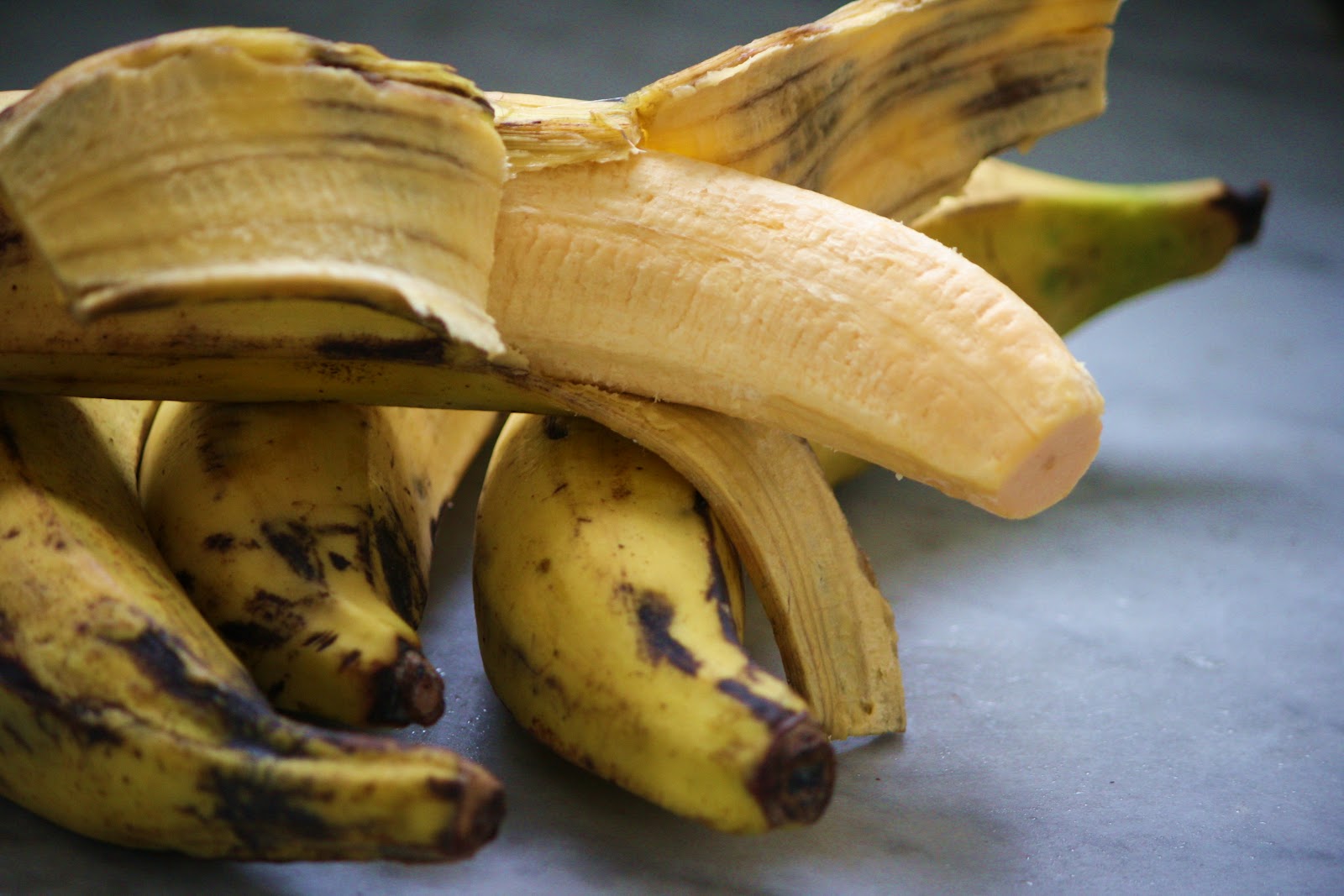
 Plantains are cooked in the same pot. I chose semi-ripe yellow plantains because they're sweeter
 Basic kitchen string and banana leaves (Goya sells them pre-packed and cleaned)
 Mound some chicken and peanut mixture in the center of a banana leaf rectangle
 Fold over both sides, then either end to form a packet
 Tie with kitchen string, being careful not to tear the leaves
 I put a steamer basket in the bottom of the pot, then added water to steam the packets
 Open up the packet, mash some of the plantain and serve it up! Delicious and very filling!

Ugandan Luwombo (Recipe adapted from Uganda Visit and Travel Guide)

2 pounds beef, chicken,  pork or smoked fish (or any combination) cut into serving-sized pieces
1 cup unsalted peanuts, ground
2 onions, chopped
4 tomatoes, chopped
1 chicken stock cube (or base)
Salt and black pepper, to taste
Banana leaves or large dock leaf or greaseproof paper (one per serving)
1 cup mushrooms, cleaned and sliced
1 smoked fish (optional)
4 plantains

1.Cook the meat in an oiled frying pan until browned but not cooked then remove and set aside.

2.Heat a teaspoon of oil in a saucepan then add the onion and cook for a minute before adding the tomatoes, chicken stock cube, salt, pepper, peanuts, mushrooms and the smoked fish (optional). If necessary add a little water to form a smooth sauce. Cook to heat through.

3.Plunge the banana leaves in boiling water to soften them remove the mid-rib* and cut the ends off the leaves to form rectangles. Place a portion of meat and some of the tomato-onion sauce (and mushrooms and smoked meat or fish, if desired) in the centre of a leaf. If you buy packed banana leaves, most brands (like Goya) have already removed the mid rib for you*

4.Fold the leaf from the sides then wrap from the ends to make at least a double layer. Tie into a package with oven-proof string then repeat until all the mixture is used up.

5.Place a wire rack or trivet in the bottom of a large casserole dish then add water to the bottom of the trivet. Place the meat packages on top of the trivet and cover the dish. Bring to a boil and steam the packets for at least an hour. Add the plantains to the pot as well.

6.Remove the plantains from the pot and mash with a fork. Top with the meat and sauce from the banana leaves and serve.


© 2010-2011, What's Cooking in Your World? Sarah Commerford/All Rights Reserved